OUI THE PEOPLE × SUPERCULTURE · CASE STUDY

How OUI THE PEOPLE Rebuilt Its Shopify Store in 30 Days

A beauty founder directed 110 small, reviewable commits through Codex. Superculture set the strategy, built the working system, and held the release discipline that carried them into production.

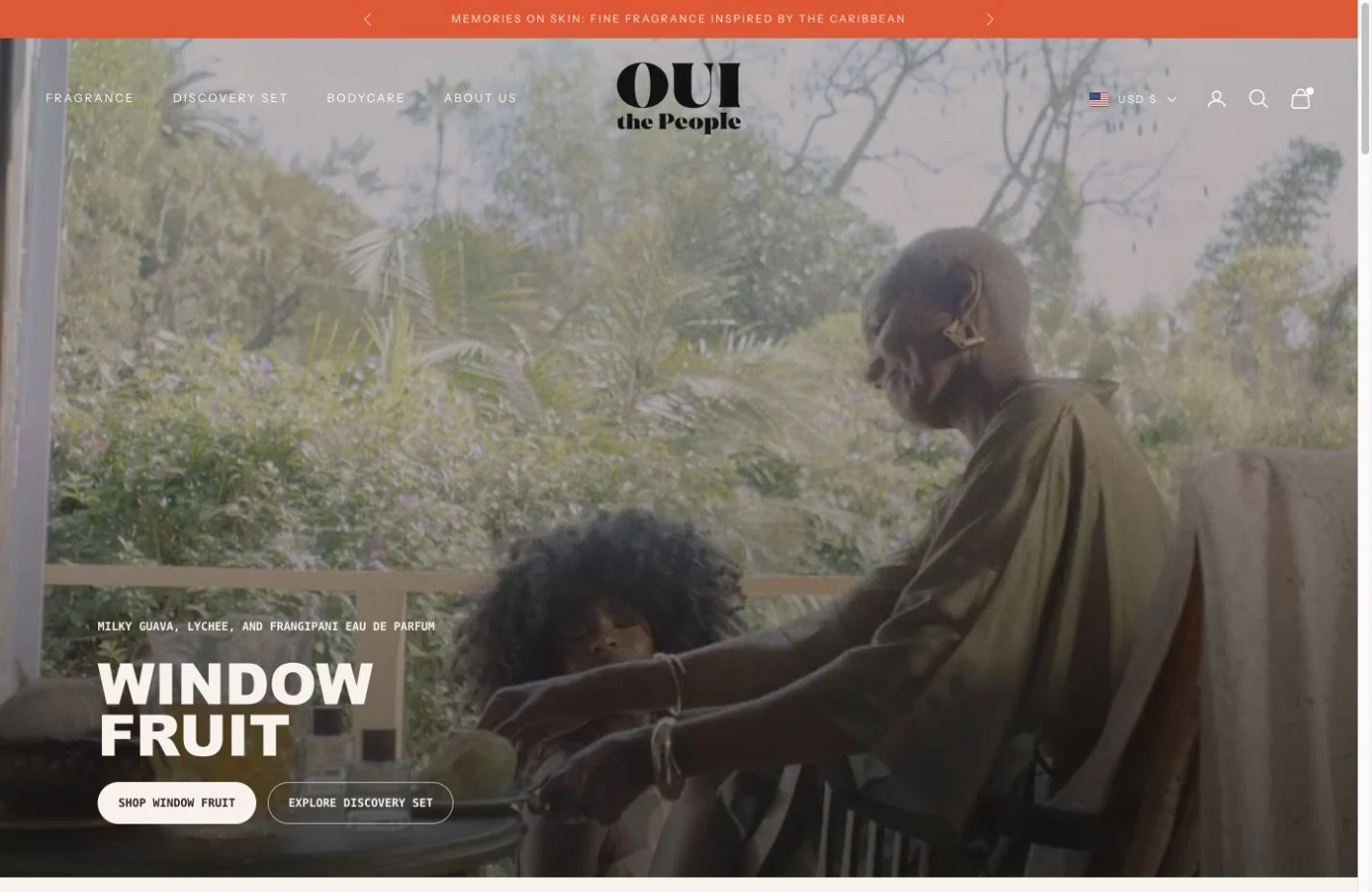
The live OUI THE PEOPLE fragrance-first homepage
The rebuilt OUI THE PEOPLE storefront made fragrance the center of the customer experience.

01

The rebuild began with a business problem, not a technology pitch.

OUI THE PEOPLE had outgrown its storefront. The AI-assisted rebuild began with a business problem, not a technology pitch: the brand had evolved from shaving into a fragrance and bodycare house, but its 2019-era site still made fragrance, the center of the business, difficult to discover. Creative ideas stalled between what founder Karen Young could change safely and what required an outside developer.

Superculture treated the redesign as an operating-model problem before treating it as a design problem. The work began with the customer journey and the commercial constraints. Then it built the protected environment, shared context, review loops, and launch controls that let Karen move from intent to production in plain English.

The rebuilt store launched on July 3, 2026, 30 days after the project repository was initialized.

The result.

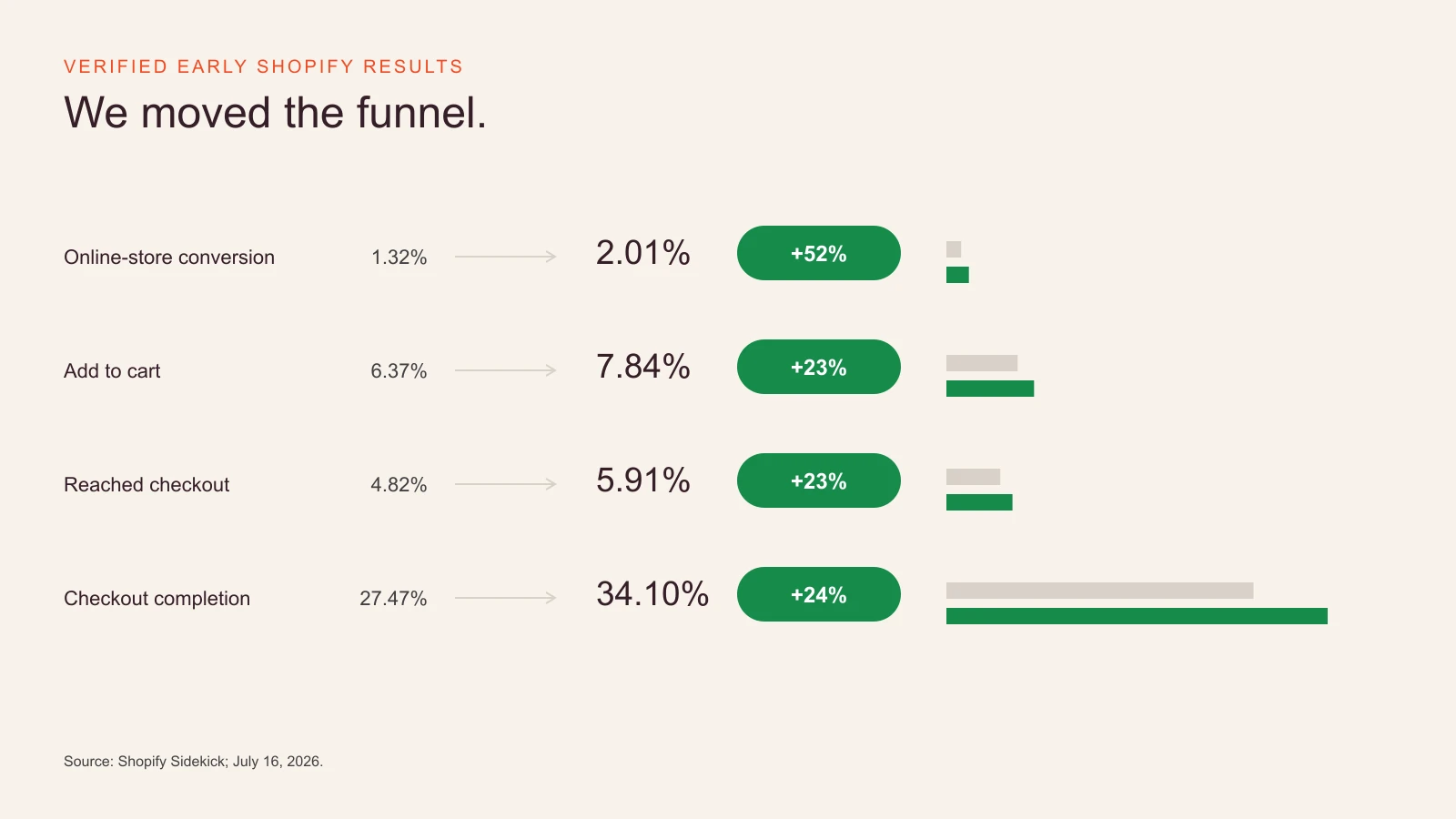
In the first post-launch comparison, checked directly in Shopify, every measured stage of the purchase funnel improved:

Online-store conversion:

1.32% → 2.01%, a 52% lift

Add to cart:

6.37% → 7.84%, a 23% lift

Reached checkout:

4.82% → 5.91%, a 23% lift

Checkout completion:

27.47% → 34.10%, a 24% lift
Early Shopify funnel results showing improvement at every measured stage

The operating result

The build also produced an operating result.

  • A $500 Shopify theme became a custom fragrance-first experience that Karen estimates would have cost more than $30,000 to build conventionally.
  • Karen directed 110 small, reviewable commits during the creative build.
  • The homepage’s initial mobile transfer fell from 48.86 MB to 2.89 MB, a 94.1% reduction.
  • Superculture rehearsed 17 routes across desktop and mobile, then verified 20 live routes plus cart and checkout entry immediately after launch.
  • OUI finished with a safe, versioned way to keep improving the store.

The launch record even includes a real production mistake and its nine-minute scoped recovery, on the record, with a timeline. Most case studies edit that part out. The full study publishes it, because the recovery is the proof.

03

The site was the visible change. The workflow was the compounding one.

The model was simple: set the strategy, coach the leader, and build the systems that ship.

Superculture translated Karen’s vision into hard commercial decisions: fragrance first; the Discovery Set as the trial funnel; direct paths to every scent; clear purchase controls; and a clean build instead of a migration of years of accumulated code.

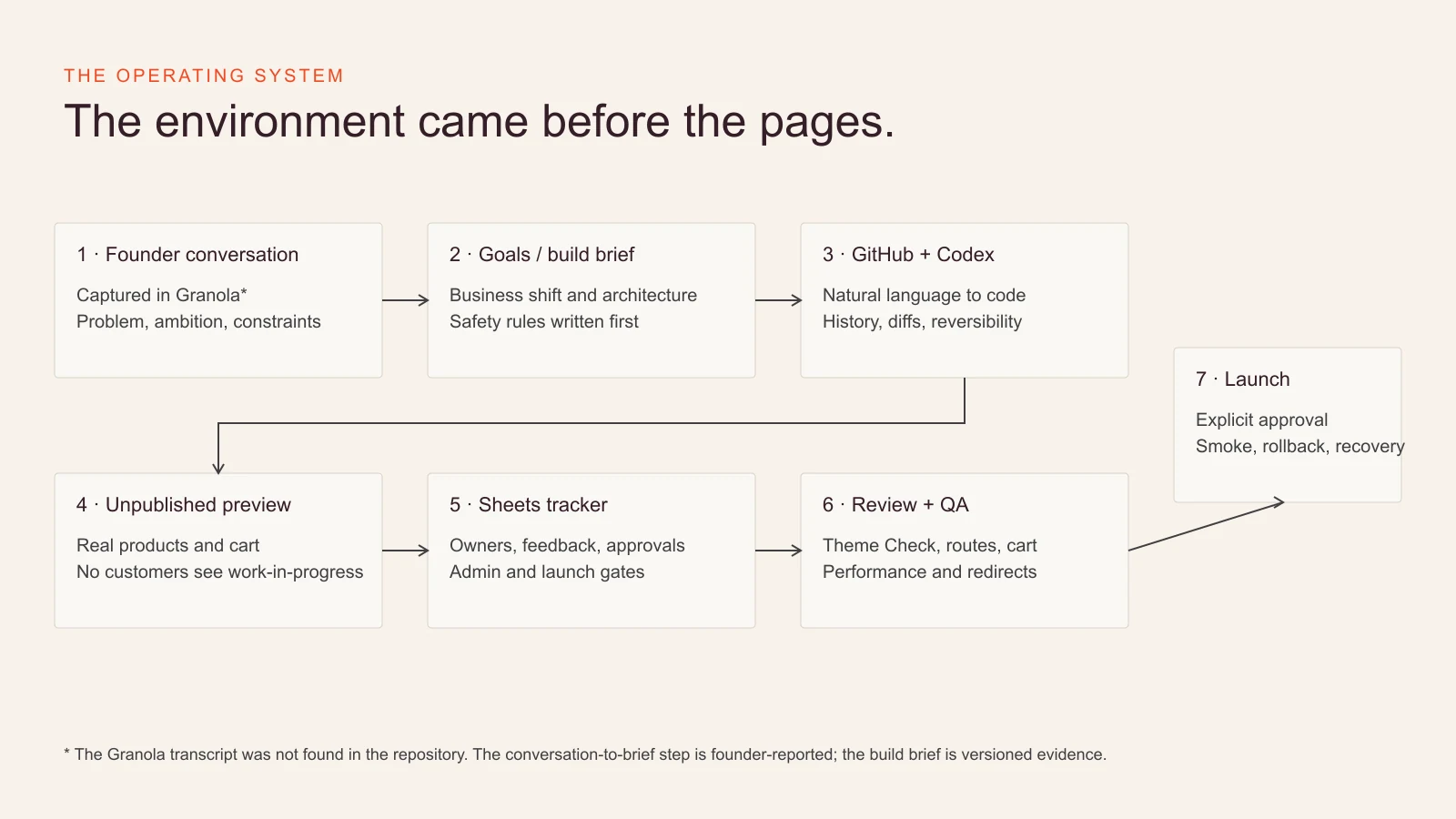
It then connected GitHub, Codex, an unpublished Shopify preview, a plain-language tracker, approval gates, QA, and rollback into one operating system. Karen could describe a change in the language of a founder and creative director, judge it against the real storefront, and reverse it if it was not right. Superculture reviewed the work and took the technical escalations.

The operating system connecting founder direction, Superculture review, GitHub, Codex, Shopify, and the project tracker
“Primarily it felt like I couldn’t possibly mess it up.”
Karen Young, founder, OUI THE PEOPLE

That safety changed the pace of learning. Karen began with a one-sentence toolchain test. By week two, she was reworking whole pages. From June 15 through July 1, she directed 110 of the 122 commits made in that window.

The handoff was real, but it was not reckless. Superculture returned to the center of the work for performance engineering, route migration, QA, launch, and recovery. Natural language made production more accessible; it did not remove the need for experienced technical judgment.

04

What customers experienced.

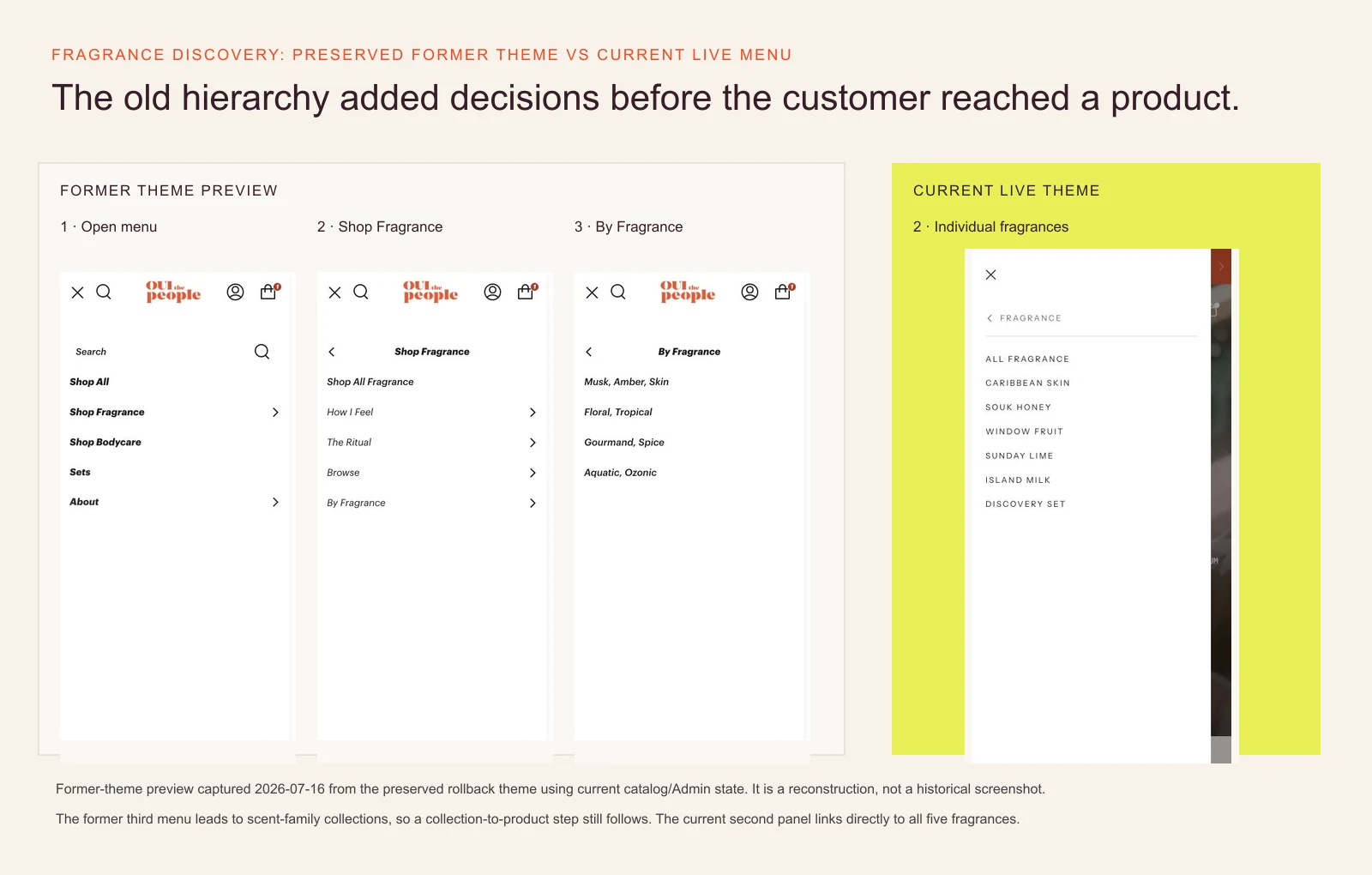
The new storefront behaves like the fragrance house OUI had become. Navigation leads with fragrance and links directly to each scent. The Discovery Set is a top-level destination. Product pages have room for notes, origins, film, reviews, and persistent purchase controls. Mobile behavior was treated as a launch requirement, not a smaller version of desktop.

The former mobile navigation beside the current direct fragrance navigation
The former-theme side is a July 16 reconstruction using the preserved rollback theme with current catalog and Shopify Admin state, not a historical screenshot.

The site became more expressive where the brand needed expression and stayed conservative where commerce needed reliability. Custom sections carried the story. Native Shopify behavior continued to carry product forms, variants, cart, search, and checkout entry.

05

What remained after launch.

Four days after launch, Karen asked to make Fragrance School visible in the footer while keeping it as a native Shopify blog she could edit herself. Codex turned the request into a scoped change. Superculture reviewed it, deployed it, and verified the live route.

The project was over. The capability was still producing.

“The biggest thing Superculture gave me was not code; it was a full plan that I could work against for a significant site overhaul.”
Karen Young, founder, OUI THE PEOPLE
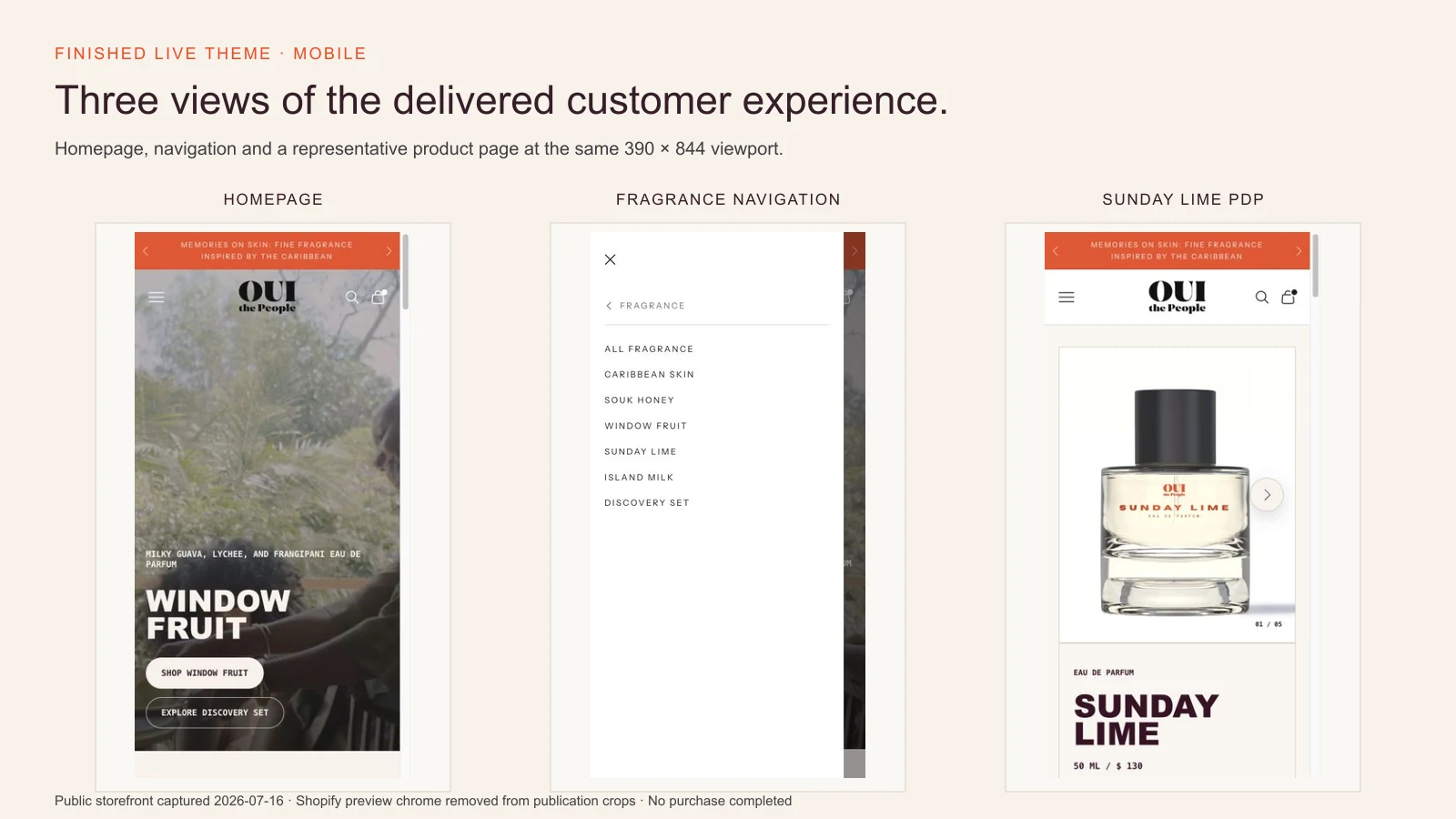
Three views of the finished OUI THE PEOPLE mobile storefront
The finished mobile experience: a fragrance-first homepage, direct product navigation, and richer product storytelling.

Read the full case study.

The complete case study includes the system behind the build, the founder handoff, the 94.1% mobile payload reduction, the exact launch controls, and the production mistake that the team recovered from in nine minutes.

If your storefront, or the way your team works on it, has outgrown what you can safely change, Superculture can help frame the strategy, establish the working system, and carry the work through production.